


 ACCESS
Research Article
ACCESS
Research Article
Volume 2, Article ID: 2026.0008

Nehad Jaser Ahmed
n.ahmed@psau.edu.sa

Department of Clinical Pharmacy, College of Pharmacy, Prince Sattam Bin Abdulaziz University, Alkharj, Saudi Arabia
Received: 18 Jul 2025 Accepted: 05 Feb 2026 Available Online: 06 Feb 2026
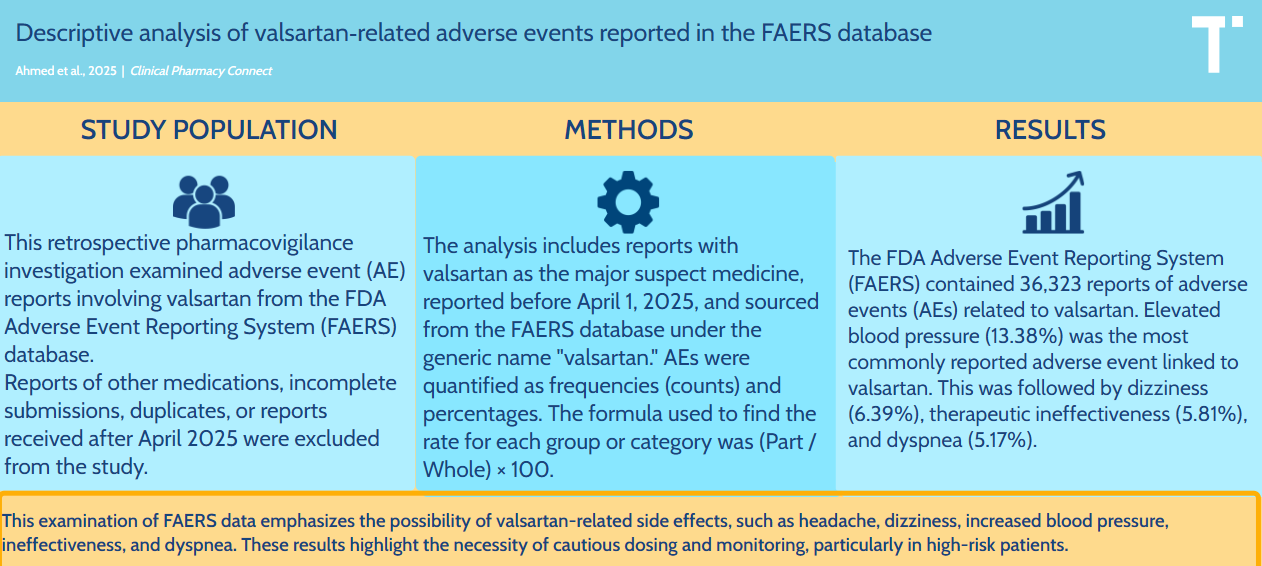
The Food and Drug Administration (FDA)-approved angiotensin II receptor blocker valsartan can treat hypertension in adults and children one year of age and up, decrease heart failure hospitalizations, and improve post-myocardial infarction (MI) survival. For a broad range of people, including diabetics, the elderly, kids, and high-risk cardiovascular patients, it is safe and effective. In addition to causing less coughing than angiotensin-converting enzyme (ACE) inhibitors, common side effects like headache, nausea, and dizziness are similar to those of the placebo. Reports containing valsartan as the primary suspect medication that were submitted before April 1, 2025, and that were obtained from the FDA Adverse Event Reporting System (FAERS) database using the generic name "valsartan" are included in the analysis. Only reports that included all relevant information (drug name, adverse event, and patient data) were taken into consideration. Adverse events were categorized using the Medical Dictionary for Regulatory Activities (MedDRA) Preferred Terms. In the FDA Adverse Event Reporting System (FAERS) there were 36,323 adverse events (AEs) related to valsartan. High blood pressure was the most common adverse event associated with valsartan (13.38%). The next in order were dizziness (6.39%), therapeutic ineffectiveness (5.81%) and dyspnea (5.17%). This FAERS data analysis indicates that there is a possibility of side effects of using valsartan, such as headache, dizziness, hypertension, ineffectiveness, and dyspnea. These results underscore the importance of dosage and monitoring particularly in high-risk patients.
Disclaimer: This is not the final version of the article. Changes may occur when the manuscript is published in its final format.